

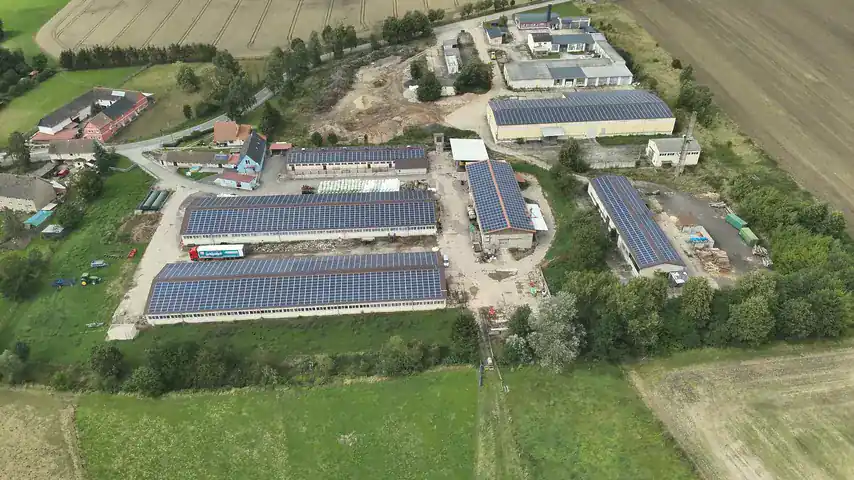
Manufacturing
Food, chemicals, printing, pharmaceuticals: high consumption and critical circuits.
We design, build and maintain commercial and industrial solar PV systems in Poland, from 50 kWp to 10 MWp, for manufacturing, logistics, retail and services. Capacity and configuration follow your 15-minute load profile (interval data from your meter), self-consumption, roof or ground conditions, grid connection and operating constraints.
The free Energy Review ends with a Savings Map: figures for your plant, missing data and the next step.
In brief
A PV system makes sense for a business when its output matches actual consumption, the site allows safe installation and the economics still work once the full scope of the investment is included. .KWARTZ designs, builds and maintains systems from 50 kWp to 10 MWp. Before recommending anything, we look at the 15-minute load profile, self-consumption and grid connection, compare roof, ground and carport options, and check variants with battery energy storage (BESS) and reactive power compensation. The model also covers the Polish capacity charge (applied 07:00–22:00 on working days), the contracted capacity agreed with the distribution system operator (DSO) and excess capacity charges. If the initial option has constraints, we assess BESS, alternative installation locations, phasing and financing, checking the delivery conditions for your site.
Food, chemicals, printing, pharmaceuticals: high consumption and critical circuits.
Large roofs. We check load capacity, documentation, DAFA guidelines (DAFA is the Polish association of flat roof and façade contractors), cable routes and access for later operations and maintenance (O&M).
Single-site and multi-site organisations: we compare consumption profiles and build one technical standard.
The 15-minute load profile, invoices and tariff, grid connection conditions, roof or ground documentation, planned changes in consumption, operating constraints and your financial assumptions.
Sized to current consumption and achievable self-consumption, taking into account the roof, ground or car park, the grid connection and future maintenance.
Analysed when battery storage could increase on-site use of PV output, cut demand peaks or support selected circuits.
Sized from measurements when the inverters and the site profile may affect reactive energy and distribution charges.
Engineering, procurement and construction (EPC): design, approvals, supply, installation, commissioning, documentation and ongoing maintenance, with clearly defined responsibilities.
We discuss your business needs and budget. We assess the load profile, available roof, ground or parking area and grid connection conditions. These inputs define the options to compare.
For low self-consumption, we assess BESS; for roof or ground constraints, we explore another installation location. We compare grid connection configurations, phasing and financing. The analysis establishes the conditions for feasibility.
Have a 15-minute load profile or your electricity invoices? That is a good place to start. We will tell you what other data we need to assess whether PV makes sense for your site and which configuration could work.
Book a free Energy Review →A 147 kWp PV system and connection, with modifications to the fire safety switchboard and automatic transfer system. The scope also includes annual installation inspections.
Solar PV, a 261 kWh battery energy storage system and integration with a generator set for selected critical circuits.
Expected payback: approx. 3.9 years, based on the analysis and its stated assumptions. This is a forecast, not a measured operating result.
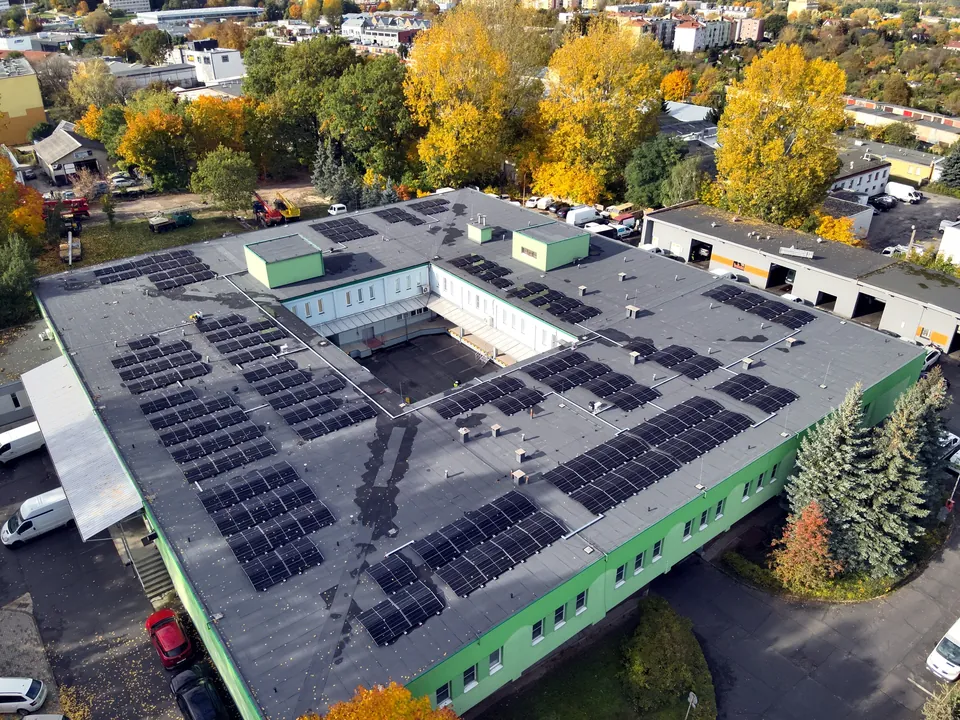
147 kWp · 2024
The PV system is integrated with the site’s backup supply. The scope also includes annual inspections.
View project details (in Polish)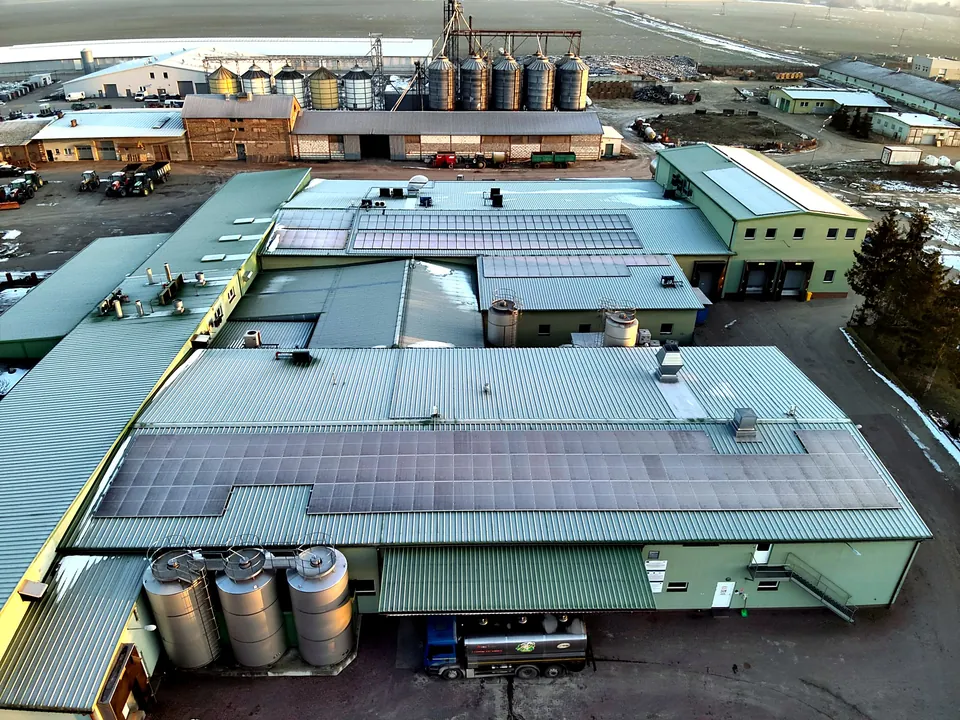
200 kWp + 261 kWh battery storage · 2025
The dairy and its rooftop PV system. The completed scope also included adding battery storage.
View project details (in Polish)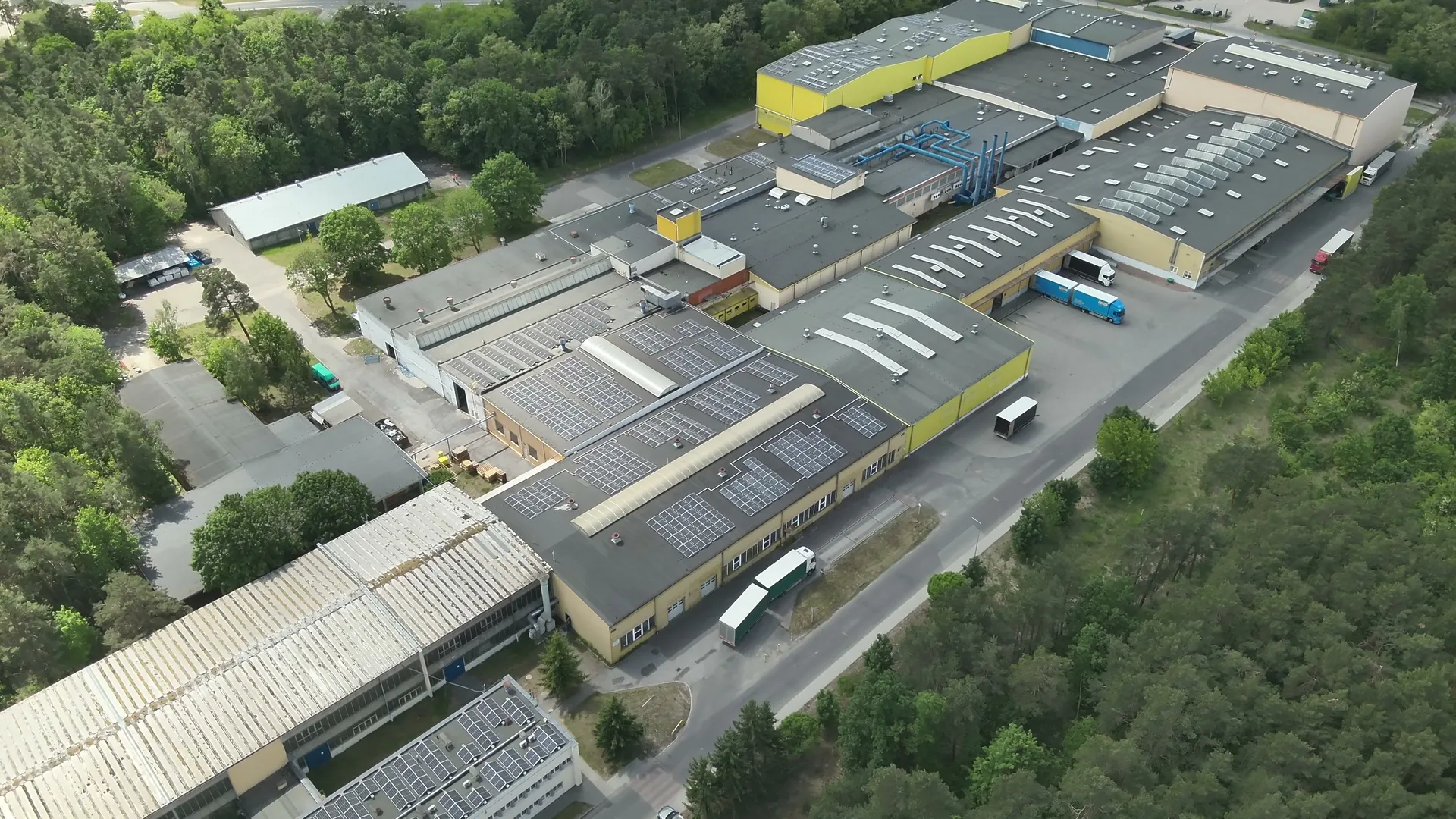
Qemetica, Bydgoszcz, 2024: approximately 357 kWp of rooftop solar PV at an operating chemical plant.
View project details (in Polish)We check which work can run alongside operations and which needs a planned shutdown, a switchover or a test in an agreed window.
Based on data (15-minute load profile, documentation), without going onto the shop floor.
Structures and switchboards are prepared before we arrive on site.
Planned around health and safety, access, weather, production and other trades.
A planned shutdown or a weekend, agreed with your maintenance team.
Tests, as-built documentation, handover.
We combine design, approvals, procurement and installation. The next stages are commissioning and acceptance documentation. Before work starts, we agree the scope and responsibilities; after commissioning, we can provide ongoing maintenance and monitoring.
If you already have design documentation, we review it before pricing the works. If the project starts with an assessment of consumption, we first review the site data and project feasibility.
A carport combines a supporting structure, a PV system and car park infrastructure in one project. It can complement a rooftop or ground-mounted system, replace roof space that is not available or form part of a new car park. We act as designer and EPC contractor on the client’s side, not tied to one manufacturer’s catalogue.
Reinforced concrete or precast footings, or screw piles. The choice follows the ground investigation, structural calculations, groundwater level, underground utilities and how the works are organised on a car park that stays in use.
PV output is modelled with site consumption and future EV charging. EV chargers, an energy management system (EMS) and battery storage are added only when the data justify them.
Clinico Medical Sp. z o.o., part of the Fresenius Kabi group, needed a renewable energy source to meet the targets of the group’s global ESG strategy, but the roof was ruled out by the process equipment installed on it, insufficient load capacity and strict fire safety requirements. We delivered two systems with a combined capacity of 100 kWp on a carport over a row of 24 parking spaces, with EV charging stations. The structures were designed for heavy traffic, so the car park remains fully usable, including by the lorries serving the plant. The roof was left untouched, and fire separation distances and compliance with the local zoning plan (MPZP) were maintained.
We completed a ground-mounted PV system at Neuca’s headquarters. A new carport project of approximately 671 kWp is under construction. The photograph shows the site and its existing infrastructure.
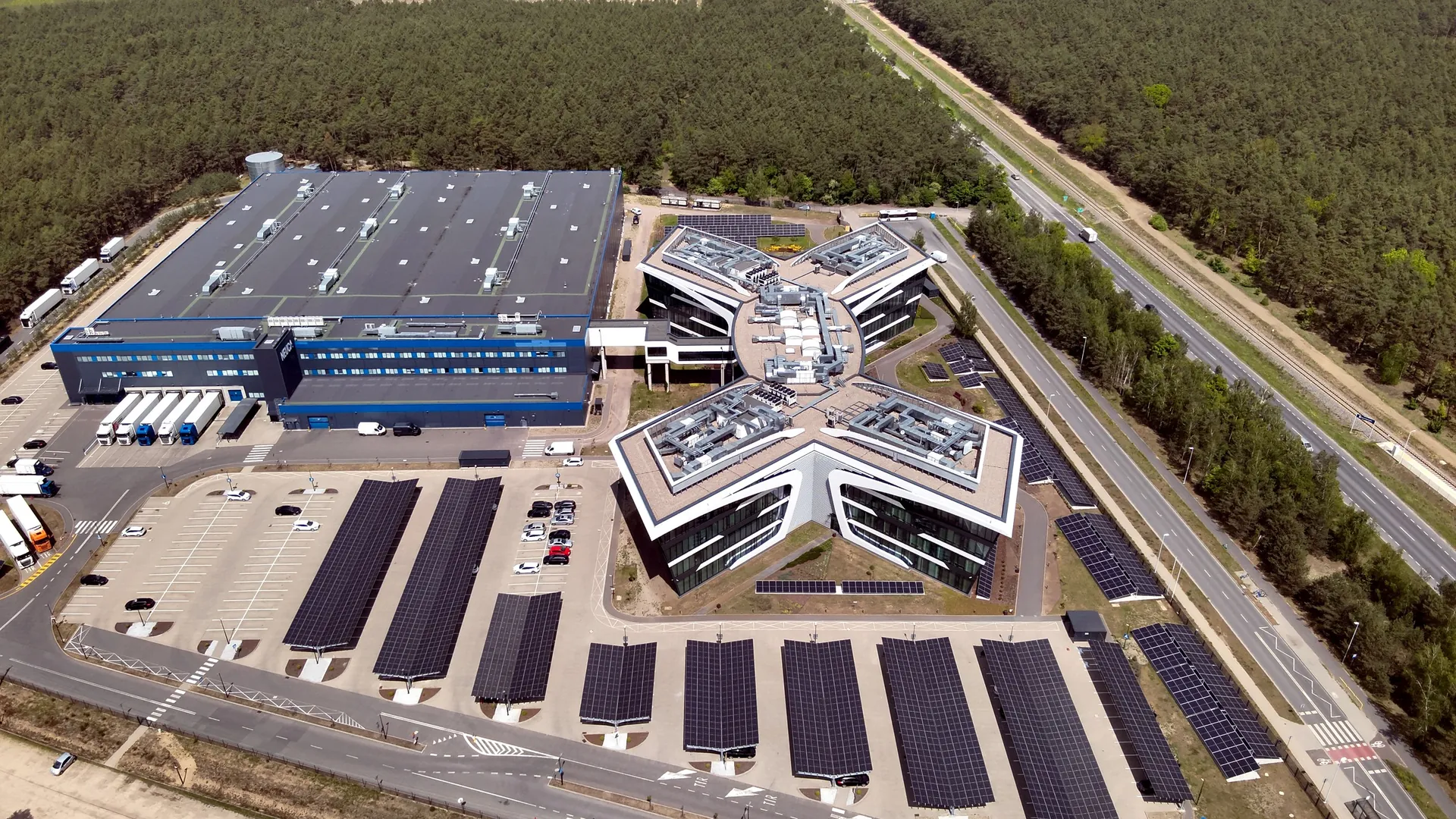
Neuca headquarters, Toruń: existing carports and solar PV infrastructure.
View project details (in Polish)Companies we have worked for








Eligibility depends on the company, region, project and the current programme rules. We assess Polish and EU funding options as part of the investment case and check current official sources before recommending an application. We do not assume that funding is available to every business.
Look for projects at comparable sites, an in-house design team, qualified site managers and a clear service scope. Compare assumptions, responsibilities, acceptance criteria and maintenance plans as well as the price per kWp. A supplier ranking cannot assess your site for you.
Yes. Our projects range from 50 kWp to more than 1 MWp, including a 604 kWp installation on a warehouse with a cold store in Niepruszewo. We assess roof load capacity, covering and warranty conditions before design, and coordinate installation with the maintenance team.
We size the system to your actual consumption profile, not to the roof area or the energy bill alone. When a large system would give low self-consumption, we first look at adding battery storage and only then at a smaller system. With battery storage, or with capacity matched to the profile, self-consumption can reach 70–90%, but we confirm this against your site’s 15-minute load profile.
Before design work starts, we check the requirements for fire protection, equipment location, inspections and the documentation needed to discuss the policy, and agree technical solutions for the site. The insurer sets the final terms of cover and the premium.
The forecast has to follow from the 15-minute load profile, actual self-consumption, the tariff, technical conditions, grid connection limits and stated assumptions. After commissioning, results should be monitored and any deviations discussed on the basis of data, not claims.
For systems above 50 kWp, the full process (installation, grid connection and commissioning) usually takes approx. 6–12 months. The schedule depends on the site, grid connection, approvals and scope; projects with battery energy storage (BESS) may need more time.
We agree the O&M scope for each installation. It can include monitoring, inspections, thermal imaging, electrical testing and rules for responding to performance deviations. We can also maintain systems built by other companies after a condition audit, a documentation review and the necessary electrical tests.
We work with financing partners and help you compare six models: a power purchase agreement (PPA), a virtual PPA (vPPA), PV as a service (PVaaS), an energy service company (ESCO) contract, subscription and leasing. The choice depends on your balance sheet, debt policy, the scope of the investment and the financing partner’s terms.
EPC brings design, procurement and construction together under one contract. The scope covers approvals, installation, commissioning and acceptance documentation. We agree responsibilities for each stage and the terms of ongoing maintenance before work starts.
Design and delivery are led by named .KWARTZ experts. Meet the team.