

Food · chemicals · printing · pharmaceuticals
HACCP/GMP requirements, critical circuits, sensitivity to micro-interruptions. References: Danmis, Ciech/Qemetica, Neuca, Bakoma.
We advise boards and CFOs, and design and deliver energy projects, from a single-plant audit to a portfolio strategy. As the EPC (engineering, procurement and construction) contractor, we are responsible for the agreed scope. Under EPCM, as owner’s engineer, we supervise contractors and protect your technical and contractual interests.
Installations from 50 kWp: solar PV, battery storage, reactive power compensation and maintenance, in one package with a single point of responsibility.
HACCP/GMP requirements, critical circuits, sensitivity to micro-interruptions. References: Danmis, Ciech/Qemetica, Neuca, Bakoma.
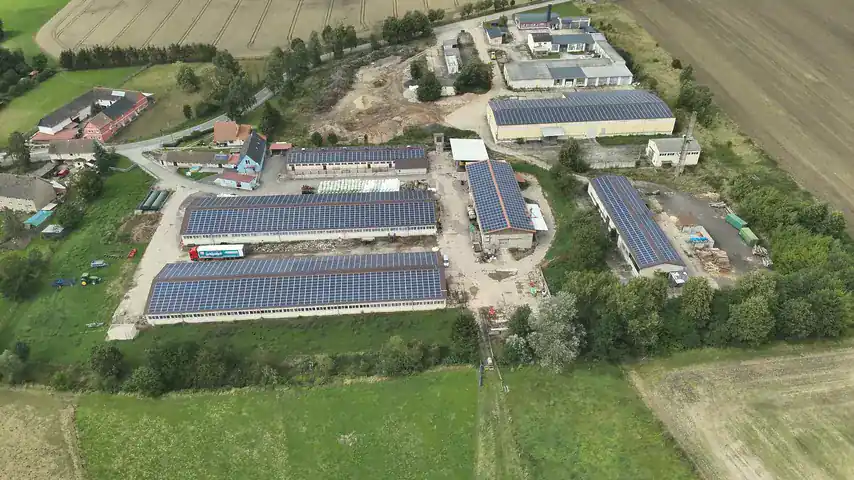
Large roofs. One contractor, from the roof load capacity assessment to O&M. References: DHL, MLP.
Petrol stations, multi-site networks and large-scale farming, with a portfolio of metering points managed centrally. References: Moya/Anwim, Kombinat Rolny Kietrz.
Companies we have worked for








Advisory and analysis
We review plant load profiles, tariffs and energy supply contracts, then compare changes to procurement with investment in on-site generation. The recommendation sets out assumptions, risks and priorities for the portfolio.
Explore energy strategy (in Polish)Legal, planning and technical analysis with a financial model for corporate-level projects.
Explore the feasibility studyAn analysis of where a plant or a group loses its energy resilience.
Explore the audit (in Polish)Delivery
Rooftop and ground-mounted, from 50 kWp to 10 MWp, sized to the actual consumption profile.
Explore solar PV for businessPeak shaving, price arbitrage, redundant supply for critical circuits.
Explore battery energy storageIndustrial UPS, backup generation, analysis of critical production lines, OT/SCADA.
Explore site electrical systemsWe select the system after invoice analysis and power quality measurements, and calculate the possible reduction in charges and the payback for each plant.
Explore reactive power compensationWe select solar PV and battery storage to suit how each site operates. These projects show the scope of the completed work.
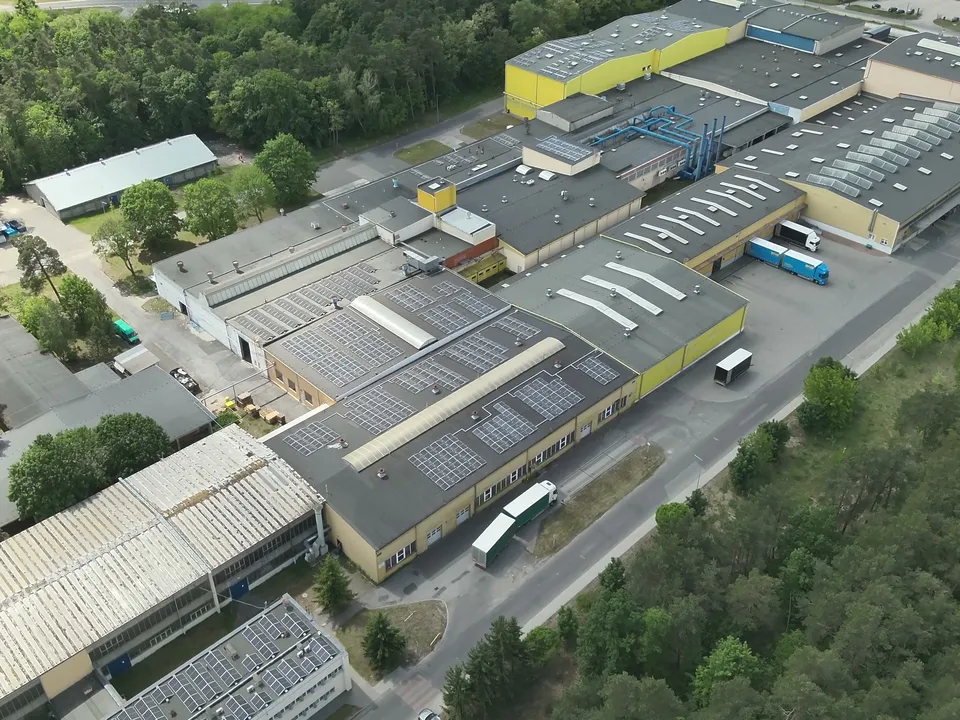
approx. 357 kWp · 2024
Installation at an operating chemical plant. We planned the work to keep access routes and passages between buildings clear.
View project details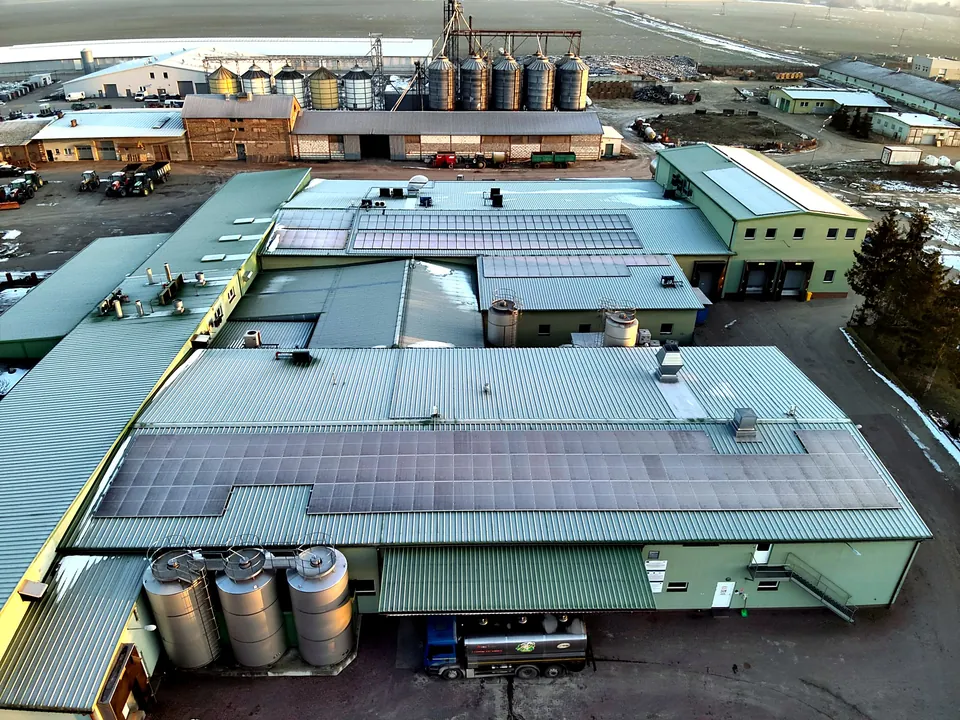
200 kWp + 261 kWh battery storage · 2025
PV expansion and the addition of battery storage at an operating dairy. The scope covered design, approvals, telecontrol, installation and acceptance.
View project details (in Polish)Expected payback is approx. 3.9 years, according to an analysis based on the assumptions adopted. This is a forecast, not a measured operating result.
View projectsTechnical audit and energy assessment of the plants, criticality classification, map of supply and power quality risks.
Load profiles, tariffs and contract terms, price scenarios and a 3–10 year action and investment plan. PPA advice can form part of the scope; the client decides on the commercial terms with the chosen supplier or generator. A recommendation is not a price or return guarantee.
Functional and performance specification (PFU), tender documents, bid evaluation, contractor selection and protection of your technical and contractual interests.
Under EPC, we are responsible for the agreed scope of design, supply, installation and commissioning. Under EPCM, we supervise as owner’s engineer.
Lower energy costs, fleet charging, resilience of selected circuits or a multi-year CAPEX plan are different goals. Each needs different data and may lead to a different technology. This stage ends with a comparison of options, not an automatic recommendation of the largest installation.
A conversation about your goal, an initial look at your invoices and available data, and the main issues. It is not a design, a full feasibility study or a statutory energy audit.
Result: a Savings Map showing opportunities to reduce costs, the data and assumptions behind the estimates, missing information and the recommended next step. The Savings Map also includes an estimated payback period and calculation assumptions. We discuss the detailed investment scope and cost at a further meeting.
Where invoices or a 15-minute load profile (interval data from your meter) are missing, we estimate from typical values for your sector and label the estimate as such. On-site measurements are a separate, paid service. Their scope, price and timing are agreed before work starts.
A paid analysis with a scope agreed before work starts, for one site or a whole portfolio. It establishes whether the investment is technically and economically justified, and which option makes sense. We match measurements and expert assessments to the project risk.
Result: a recommendation with its assumptions, limitations and risks. If the initial option has constraints, we compare changes in scope or technology, phasing and financing, then agree which option to investigate further.
Work runs alongside production. We plan the schedule and critical connections in windows agreed with your maintenance team, and confirm any interruptions needed, and how long they will last, before work starts.
Based on data (15-minute load profile, documentation), without going onto the shop floor.
Structures and switchboards are prepared before we arrive on site.
We adapt installation work to the plant’s operating schedule. Power shutdowns take place during agreed maintenance breaks.
A planned shutdown or a weekend, agreed with maintenance.
Tests, as-built documentation and handover.
Motors, transformers and drives draw inductive reactive energy. Your distribution system operator (DSO) may charge when the contractual limit for tan φ is exceeded, most often 0.4. Capacitive reactive energy is billed separately. We size reactive power compensation (power factor correction) after checking invoices and measuring power quality. The estimate uses the system cost and the expected reduction in charges; we verify the result after commissioning using measurements and subsequent invoices under comparable operating conditions.
Reactive energy charges, the tariff and the limit values in your DSO contract.
Reactive power, harmonics and unbalance, recorded over the plant’s full operating cycle.
Inductive or capacitive power, harmonics, load variability.
A capacitor bank, a detuned capacitor bank (with reactors) or an active compensator, matched to the actual profile.
Switchboard connection, measurements, settings and documentation.
We verify the effect after commissioning and watch for profile changes that may require new settings.
We analyse the reactive energy items on distribution invoices and measure the installation over its operating cycle. We then select the compensation system, plan installation and settings, and carry out functional tests. After commissioning, we compare measurements and charges for comparable billing periods, allowing for changes in load and tariff.
Measurements with a power quality analyser and a site visit are charged separately. Their scope, price and timing are agreed before work starts. You can request the initial conversation without booking measurements.
Book power quality measurements →Check whether the invoice lists inductive reactive energy, capacitive reactive energy or both. The names and units on the bill help us establish the next step.
Compare actual periods and days covered. One month does not establish the annual pattern or the result of compensation.
Note changes in shifts, equipment and demand. They help explain the charges and define any measurements needed.
You can book the initial conversation without completing this check. Measurements are a separate paid service with an agreed scope, price and timing.
Book a free Energy ReviewRecord the answers to these six questions. Mark missing information for clarification, align scope and assumptions, then compare prices.
Check the goal, the period covered by the 15-minute data, the invoices and any planned changes in demand. All suppliers should use the same inputs.
Ask: Which data did you use, and which changes at our site did you allow for?
Compare design, formalities, equipment, installation and connection. For BESS, include the power conversion and control systems. Check exclusions.
Ask: What remains our responsibility, and what costs are outside this price?
For PV, compare forecast generation and on-site consumption. For BESS, compare power, usable capacity and charging strategy. Check energy price assumptions.
Ask: Show how the system will operate on our consumption profile.
Check the roof or equipment location, electrical connection, grid constraints and planned outages. Separate contractor dates from those controlled by the DSO.
Ask: What needs modifying, and when would the works interrupt the power supply?
Compare measurements, functional tests, as-built documents and operator training. For BESS, specify tests of the agreed control functions.
Ask: Which test results, documents and monitoring access will we receive?
Compare equipment and workmanship warranties separately from service. For batteries, check the cycle and capacity-retention conditions, not just the number of years.
Ask: What is covered, which inspections are required, and what response time is agreed?
Review the scope with finance and maintenance. The checklist supports a decision; it does not confirm technical suitability or savings. You can request a conversation before completing it.
Book a free Energy ReviewWe help you choose one of six financing models: a power purchase agreement (PPA), a virtual PPA (vPPA), PV as a service (PVaaS), an energy service company (ESCO) contract, subscription or leasing. We work with funds that finance PPA projects and support applications under Polish and EU funding programmes, including sector funds for energy-intensive industry.
We also look after installations we did not build. A takeover starts with an electrical audit of the whole installation.
Operations and maintenance →Under EPC, we are the general contractor: responsible for design, supply, installation and commissioning, with one warranty for the whole scope. Under EPCM (engineering, procurement and construction management), we act as owner’s engineer: we supervise the process, evaluate bids and protect the client’s technical and contractual interests, while selected contractors carry out the works. EPC transfers delivery risk to one partner; EPCM leaves the group in control of contractor selection across a dispersed portfolio.
An energy installation becomes part of the plant’s control layer, so we treat it as part of OT security, not just an investment. We design network segmentation, access control for the energy management system (EMS) and monitoring systems, and integration with the existing SCADA so that no new attack vectors are created. We carry out monitoring in line with IEC 61724-1 and protect critical circuits with a redundant power supply.
We start with a portfolio diagnosis and, on that basis, build the group strategy, financial models (LCOE/NPV/IRR) and a 3–10 year investment plan with resilience priorities and a CAPEX schedule. We set one design standard and one reporting system for the whole portfolio, and confirm the scope of responsibility separately for each site.
Yes. We provide data on energy production and avoided CO₂ emissions for ESG and CSRD reporting, and investment in energy independence directly reduces the group’s carbon footprint and Scope 2 emissions. We represent the client’s interests, not those of a technology manufacturer or distributor: our recommendations follow from data and audits, not commissions.
No. Before the decision, we set out the total cost of ownership (TCO) in full: service and monitoring (O&M), insurance and the cost of any replacement at the end of the operating period. The design allows for natural cell degradation. Its rate depends on the technology and the operating profile, and warranty parameters are confirmed in the selected manufacturer’s specification. The decision rests on TCO, not on CAPEX alone.
Our proposals are based on your 15-minute load profile from the DSO, actual self-consumption, the tariff and the capacity charge. We run the calculations in professional design software, and the figures can be checked. After commissioning, monitoring tracks actual yields.
Motors, transformers and drives are among the loads that draw inductive reactive power. Long cables and some LED power supplies, UPS units and inverters can contribute capacitive reactive power. The result depends on their design, settings and operating conditions; measurements establish what is happening at the site.
We first use electricity bills to identify inductive charges, capacitive charges or both. Measurements then guide the choice of capacitor banks, shunt reactors or a static var generator (SVG). Measurements after commissioning confirm the reduction achieved.
The free Energy Review ends with a Savings Map: figures for your plant, missing data and the next step.
Prefer to describe it in more detail? Full contact form → Talk to an engineer